Lungs & You Progression Tool
Mar 12, 2021

Bringing invisible progression to life through interactive storytelling.
Executive Summary
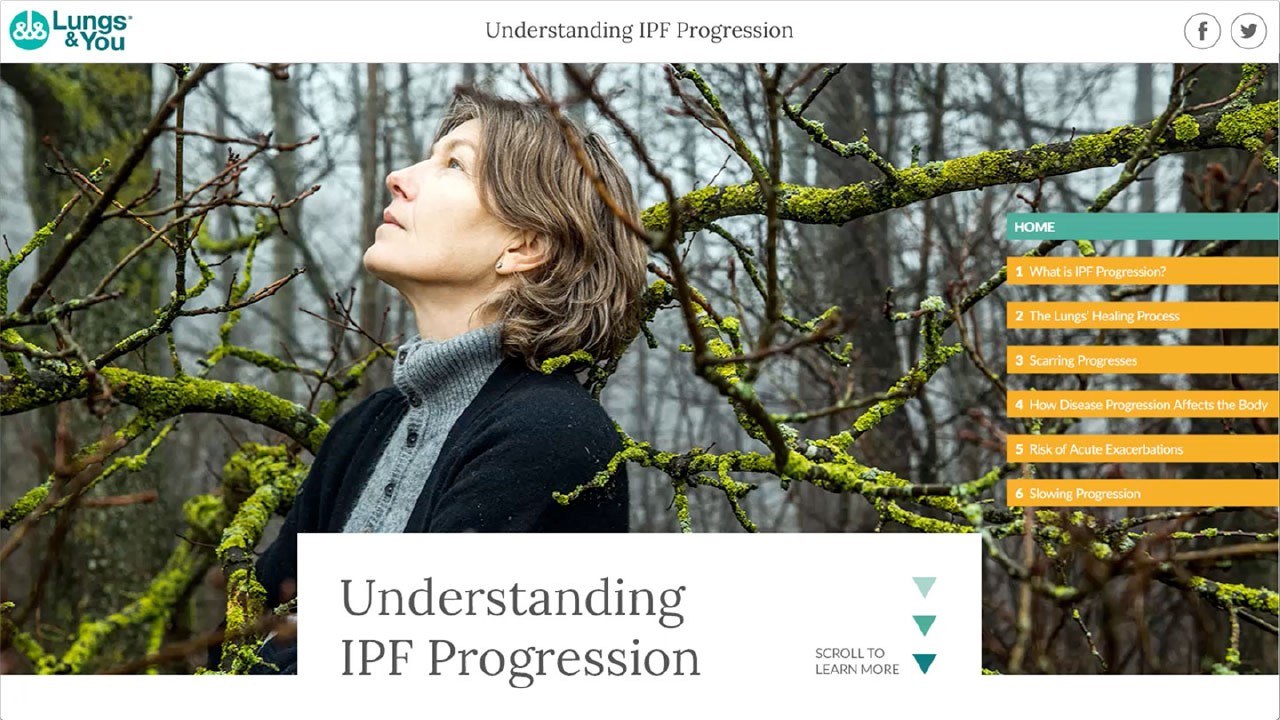
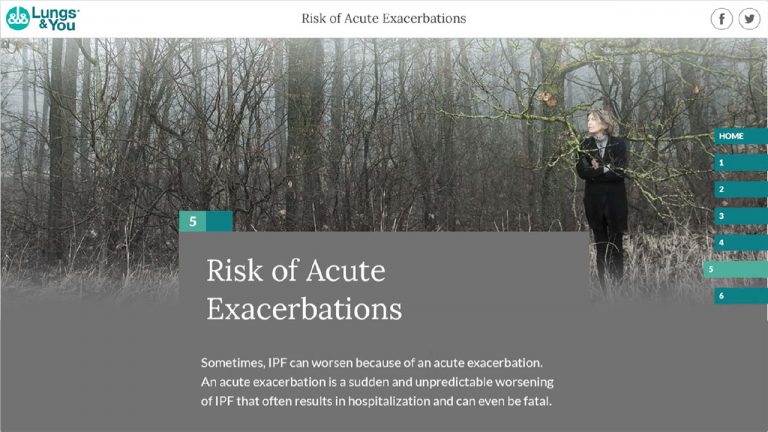
The Lungs & You Progression Tool was created to help patients and caregivers visualize the progression of idiopathic pulmonary fibrosis (IPF) through a deeply interactive and emotionally resonant feature story. Developed at Wunderman Thompson for Boehringer Ingelheim, the experience was built on a Drupal/Acquia framework with complete creative flexibility to enable dynamic storytelling. Inspired by the New York Times’ interactive editorial experiences, the tool guided users through an immersive narrative that made the invisible progression of IPF both understandable and shareable.
Background
Idiopathic pulmonary fibrosis (IPF) is a chronic, degenerative lung condition that progressively scars lung tissue, making breathing increasingly difficult. Because IPF’s effects develop slowly and invisibly, newly diagnosed patients and caregivers often struggle to understand how it worsens over time.
Boehringer Ingelheim’s Lungs & You platform already served as a trusted hub for IPF education, but the existing experience was largely static. The opportunity was to create a dynamic, interactive story that illustrated how scarring impacts lung function, helping users grasp the physical and emotional toll of the disease while encouraging meaningful conversations with healthcare providers.
Goals
Develop an interactive feature story that visually and narratively demonstrates IPF progression in an accessible, shareable way.
Launch a multi-channel social campaign to drive engagement across platforms and integrate with Boehringer Ingelheim’s CRM ecosystem.
Educate and empower both patients and caregivers through storytelling that fosters empathy and understanding.
Discovery & Research
To ground the experience in authenticity and empathy, the design and strategy teams collaborated closely with an IPF patient advocacy group. This partnership provided firsthand insight into what patients and caregivers found confusing, frightening, or misunderstood about the disease.
We also conducted moderated testing sessions with both patient and caregiver participants to evaluate how well the story conveyed disease progression and whether the emotional tone resonated appropriately. Benchmarking against high-engagement medical education campaigns and editorial storytelling helped shape a best-in-class experience.
Design & Implementation
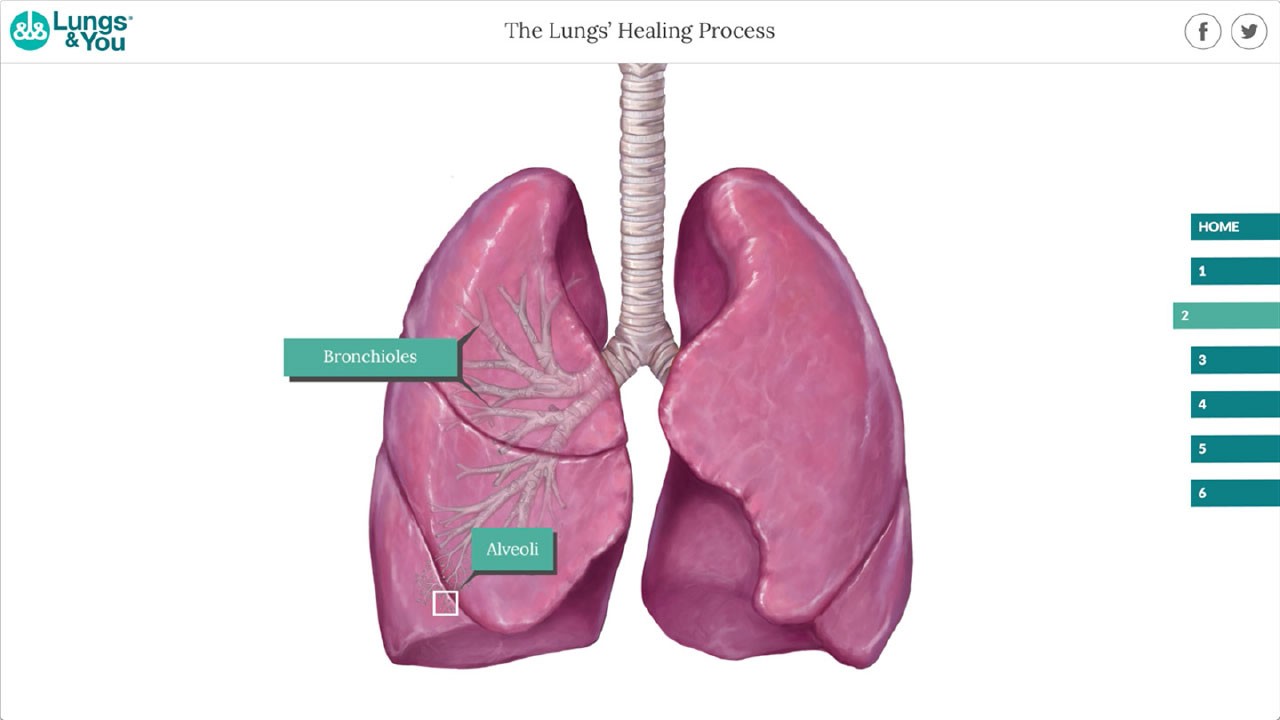
Narrative Concept: The tool followed a “journey of breath” as it moved through the lungs, illustrating how scarring and stiffness reduce oxygen exchange over time.
Visual Design: Leveraged 3D animation and interactive transitions to emulate the sophistication of New York Times “Snow Fall”-style pieces while remaining medically precise.
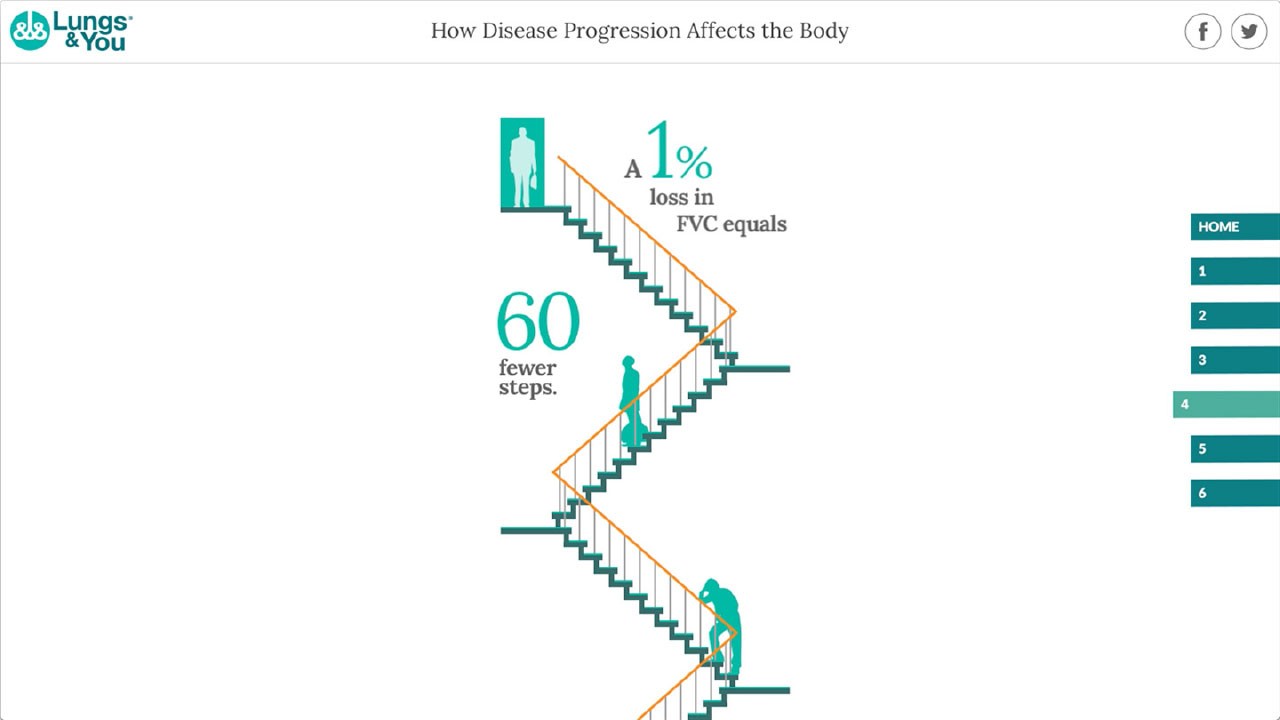
Interaction Design: A scroll-driven timeline allowed users to explore disease progression at their own pace, revealing new insights, patient quotes, and data as they advanced.
Accessibility: Fully responsive and WCAG-compliant design ensured usability for older audiences, many of whom experience visual or motor limitations.
Technology: Built in Drupal with Acquia for content flexibility and seamless integration with Boehringer Ingelheim’s CRM to capture engagement and education sign-ups.
Outcomes
Engagement: Average time on page increased by 240% versus static content.
Shareability: The campaign achieved 3× higher social shares than benchmark disease-education posts within 60 days.
Comprehension: Post-experience surveys showed a 45% improvement in participants’ ability to explain how IPF progresses.
Conversion: CRM sign-ups grew 28% during the campaign period, fueled by shareable storytelling and embedded calls to action.
Key Takeaways
Immersive storytelling can humanize complex medical concepts and improve patient comprehension.
Collaborating with patient groups was invaluable to ensure both medical accuracy and emotional authenticity.
Integrating CRM and social touchpoints transformed an educational experience into a measurable engagement driver.
Creative freedom within a structured CMS (Drupal/Acquia) made it possible to deliver editorial-grade interactivity within a regulated pharmaceutical environment.